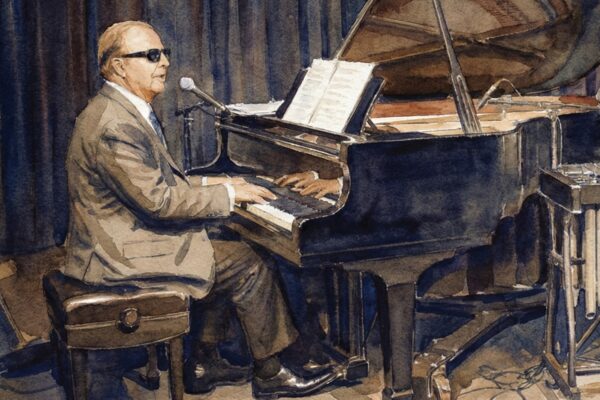


Welcome to my music blog - The Soundtrack of My Life!

Many of you have asked me “What’s with all the music, Dr. Weiss?” Well, as I’ve told some of you:

I personally call every surgery patient on the evening of surgery just to make sure they are doing well and have no questions that need answering. Occasionally, I would be at the piano and play a song that we had listened to that day. I gradually realized that I wanted to go through all the music that I had played during my life and at least start making a list of the songs that I had recently played.

Well, there are now about 600 songs on the list and I realized that it in a way it represented the ‘soundtrack of my life’! And that’s how I got the idea to record these songs and share them with my patients, friends and family. After I record them they will reside here, for easy access.

Music is truth. It’s honest. It’s really the first social media, where in a way, people could share their souls directly. And isn’t that what the purpose of social media is and why it’s so popular - trying to share who you really are, as completely and directly as possible?

Finally, it has been (and will continue to be) a genuine pleasure sharing these different songs with you and I really appreciate all of your positive feedback!!

Musical Genres

Screenshot 2026 03 01 at 10.10.41 PM

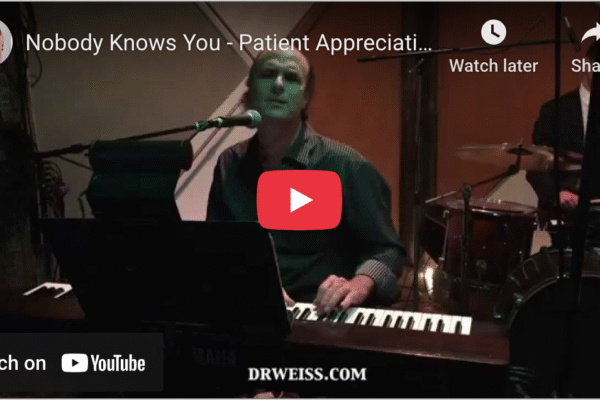
Nobody Knows You When You’re Down And Out – Live!

March 1, 2026

Sometimes we just like to say thank you to our awesome family of patients and friends, hang out, and have a little fun. And that’s exactly what we did at this event! We couldn’t invite everyone (at least not until the SuperDome rent drops a little), but some lucky folks got to eat, drink and be merry with a little accompaniment by the fabulous live music of Dr. Weiss and Nutty Jazz. Thanks for the memories!! Enjoy, Dr. Weiss Dedicated to all my friends, family and patients. I hope that you are all doing well.   You can find more about Nutty Jazz and their music here: http://nuttyjazz.com/
Laura

Laura

December 30, 2025

Laura (1:41) Music: David Raksin.    Lyrics: Johnny Mercer “Laura” is a movie theme melody written by David Raksin in 1944 for the film Laura, a noir mystery directed by Otto Preminger. Preminger had originally wanted to use Duke Ellington’s “Sophisticated Lady” as the theme, but Raksin was not convinced that it was suitable. Angered, Preminger gave Raksin one weekend to compose an alternative melody, and over that weekend he got a personal letter from his wife asking for a divorce – which may explain its haunting quality. The melody is lyrical, chromatic, and bittersweet, moving between major and minor moods. Because of its sophisticated structure, it became a favorite among jazz musicians for improvisation. It was recorded by Frank Sinatra, Ella Fitzgerald, Charlie Parker, Nat King Cole, Bill Evans, and Julie London, among many others. Today, it’s considered one of the most enduring and frequently played ballads in the Great American Songbook and probably the most notable film noir music theme. The lyrics were written by Johnny Mercer after the film made the tune popular. Mercer makes Laura not just a woman, but a metaphor for elusive beauty and memory. I tried to match my illustration to the lyric: “And you see Laura […]

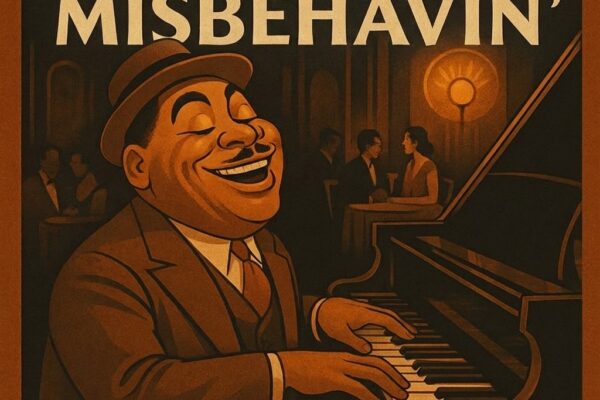
Aint Misbehavin

Ain’t Misbehavin’

December 19, 2025

Ain’t Misbehavin’ (1:09) Thomas “Fats” Waller This is such a cool song! I dug it up from a previous post and decided to add a vocal. If you don’t know about Fats Waller, you should.  Check him out on Wikipedia and Youtube.  One thing I remember is that shaking hands with him was like shaking hands with a bunch of bananas!  He was a character among characters!Enjoy, Dr. Weiss

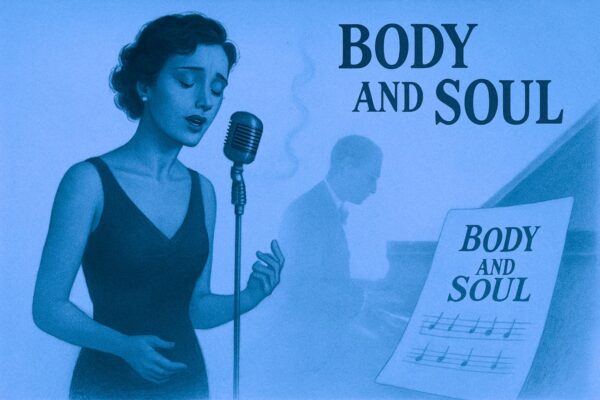
Body and Soul blue

Body and Soul

December 16, 2025

Body and Soul (5:10) “Body and Soul” is a popular song and jazz standard written in 1930 with music by Johnny Green. Louis Armstrong was the first jazz musician to record “Body and Soul” in October 1930, and it went on to become one of the most recorded jazz standards in history. James Moody James Moody was an American jazz saxophone and flute player and very occasional vocalist, playing predominantly in the bebop and hard bop styles. “Body and Soul” is considered a challenging piece to solo over; however, the unusual nature of the chords provides a lot of improvisational freedom which Moody certainly takes advantage of in this rendition. Eddie Jefferson, James Moody and Vocalese. Vocalese is a style of jazz singing in which words are added to an instrumental soloist’s improvisation [slightly different than a contrafact, which is a musical composition (no lyrics) consisting of a new melody overlaid on a familiar harmonic structure, see related post below]. Vocalese uses recognizable lyrics that are sung to pre-existing instrumental solos, as opposed to scat singing, which uses nonsense words in solos. Anyway, Eddie Jefferson was captivated by James Moody’s talent and put lyrics to one of James Moody’s solos to “Body and Soul”. How this […]

Try a little tenderness Shearing illustraton.

Try A Little Tenderness

December 12, 2025

Try a Little Tenderness (2:35) “Try a Little Tenderness”   is a song written in 1932 by Harry M. Woods (music), Jimmy Campbell and Reg Connelly (lyrics). This version is in the style of George Shearing. His harmonies are so rich, and chordal reharmonizations so unique and full, that it makes you want to linger on every note and chord. His chord voicings and the way he moves between them are unmistakably distinctive. It’s worth a close listen. I didn’t realize it was such a popular standard when I first learned it from a transcription of George Shearing as a teen.  After all these years, it blew me away when I just recently listened to Otis Redding’s classic R&B version!  Bing Crosby recorded it in 1933, and the song appeared on Frank Sinatra’s debut album in 1946!  Other covers: Michael Bublé, Aretha Franklin, Etta James, Percy Sledge, Frankie Valli, Al Jarreau, Jimmy Durante, Rod Stewart, Michael Bolton, Peggy Lee, Nancy Wilson, and the Glee Cast, among others. Back to Otis Redding. A popular version in an entirely new form was recorded by soul artist Otis Redding in 1966. Redding was backed on his version by Booker T and the MGs.  This […]

Bill Bailey Rick and Rina lo res photo

Won’t You Come Home Bill Bailey

November 21, 2025

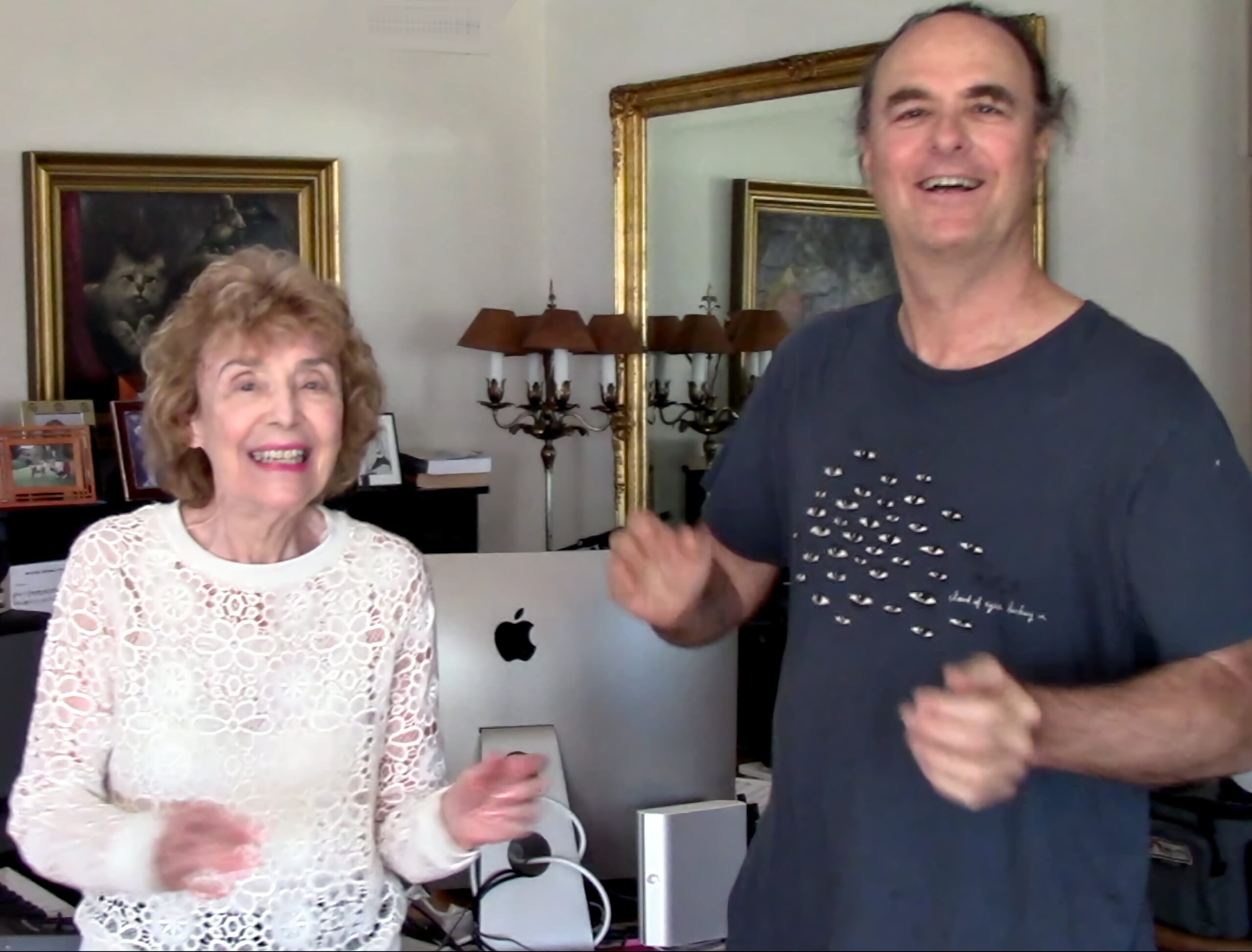
Rick and his Mom   Won’t You Come Home Bill Bailey?   Written in 1902 by Hugh Cannon, this popular ragtime/jazz song is based on the true story of his drinking buddy Bill Bailey and his wife Sarah. They were married in 1893, but she finally divorced Bill in the 1940s after 40 years of marriage. In 1973 she told a reporter, “Bill was my sweetheart, but he was everybody else’s, too. He lied to me all the time, but I was too young to understand much then. I was a country girl.” Sarah died in 1976 at the age of 102. The song has been recorded by Louis Armstrong, Patsy Cline, Bobby Darin, Wayne Newton, Al Hirt, Brenda Lee, Ella Fitzgerald, Jimmy Durante, Phish, Harry Connick Jr., Lena Horne, Michael Buble, and countless others. Here is me and my mom’s version in a rollicking Weiss Music Minute! Enjoy, Dr. Weiss

Angel eyes with hands 30 percent and button

On A Clear Day (You Can See Forever)

February 11, 2025

On A Clear Day (You Can See Forever)(3:58) This is my version of how the great jazz pianist Bill Evans would have played this song by Alan Jay Lerner and Burton Lane from the 1965 Broadway show. A 1970 film adaptation directed by Vincente Minnelli starred Barbra Streisand, Yves Montand, Bob Newhart and Jack Nicholson. (That one might be worth checking out!)  AI Chat of the Week: The Art of Jazz Improvisation and Cosmetic Eyelid Surgery Me:   “Write a blog linking a musical improvisation of ‘On A Clear Day’ to the qualities needed to perform delicate cosmetic eyelid surgery – and vice versa” ChatGPT: “Harmony in Precision: Connecting Musical Improvisation and Cosmetic Eyelid Surgery In both art and science, mastery demands a blend of precision, intuition, and adaptability. Whether it’s an improvised rendition of On A Clear Day, with its fluid melodies and dynamic emotional shifts, or the meticulous artistry required in cosmetic eyelid surgery, the parallels between these seemingly disparate disciplines are striking. Both require a keen awareness of structure, a deep understanding of form, and the ability to adapt gracefully in the moment. 1. The Art of Improvisation: A Delicate Balance When a musician approaches On A Clear Day, they enter a space where technical proficiency meets artistic expression. The jazz-inspired nature of […]

Corcovado a serene night scene inspired by the bossa nova song Corcovado The image features a quiet, starry night sky over a calm moonlit landscape

Corcovado (Quiet Nights of Quiet Stars)

October 1, 2024

Corcovado (1:43) “Corcovado” (known in English as “Quiet Nights of Quiet Stars”) is a bossa nova song and jazz standard written by Antônio Carlos Jobim in 1960. English lyrics were later written by Gene Lees. The Portuguese title refers to the Corcovado mountain in Rio de Janeiro. Considered as one of the great exponents of Brazilian music, Jobim merged Samba with Cool jazz in the 1960s to create Bossa nova, with worldwide success. As a result, he is regarded as one of the fathers of bossa nova. In fact, “The Girl from Ipanema”, composed by Jobim, has become one of the most recorded songs of all time, Enjoy, Dr. Weiss Info from Wikipedia Bösendorfer piano sound: for this recording I’m playing a Yamaha Clavinova – which has the same keyboard action as a traditional acoustic piano, but there are no strings. Pressing a key activates (in this case) a sound which was sampled from a Bösendorfer Imperial Concert Grand piano. Try listening to it with a good set of headphones!

Im In The Mood For Love

I’m In The Mood For Love

February 14, 2024

I’m In The Mood For Love (1:55) Recorded 2/13/24 George Shearing   George Shearing passed away ON THIS DAY, February 14, in 2011. One of the jazz greats, Sir George Shearing was known for his incomparable and complex reharmonizations. Usually, in classical, pop, or jazz, a piano player may use (hopefully sparingly) the damper pedal (the one on the right) to blend adjacent similar chords, usually one or two measures (4-8 beats). However, for this arrangement, I’m changing the pedal literally with each beat!! Listen carefully and you will hear how Shearing makes the song his own. Thanks, George, for showing us a new way of playing and listening. Happy Valentine’s Day! Enjoy, Dr. Weiss

Mr Jelly Lord horizontal crop 2

Mr. Jelly Lord – Jelly Roll Morton

January 23, 2024

Mr. Jelly Lord (1:33) Recorded 1/21/24 Jelly Roll Morton, born October 20, 1890 in New Orleans, has been called the first great composer and piano player in jazz. Actually, Morton once confessed that his innovations resulted from his inability to remember and play ragtime pieces properly. He had to “fudge” the notes. His improvisations led him to create loose, swinging rhythms that were more informal than ragtime, and sounded a lot more fun. Morton was jazz’s first arranger, proving that a genre rooted in improvisation could retain its essential characteristics when notated. I can personally attest to that. How else would a kid from the Philadelphia suburbs be able to record this song 100 years later? His composition “Jelly Roll Blues”, published in 1915, was one of the first published jazz compositions. He also claimed to have invented jazz. I don’t know about that (Louis Armstrong and others might also take issue with that claim), but he was certainly foundational and very influential in the development of jazz from ragtime. Morton had an eye for the ladies and the charm of a snake oil salesman. To tide himself over, from time to time, he put his talents to use as a […]