Welcome to my music blog -
The Soundtrack of My Life!
Many of you have asked me “What’s with all the music, Dr.
Weiss?” Well, as I’ve told some of you:
I personally call every surgery patient on the evening of
surgery just to make sure they are doing well and have no questions that need
answering. Occasionally, I would be at the piano and play a song that we had
listened to that day. I gradually realized that I wanted to go through all the music
that I had played during my life and at least start making a list of the songs that
I had recently played.
Well, there are now about 600 songs on the list and I realized
that it in a way it represented the ‘soundtrack of my life’! And that’s how I got
the idea to record these songs and share them with my patients, friends and family.
After I record them they will reside here, for easy access.
Music is truth. It’s honest. It’s really the first social
media, where in a way, people could share their souls directly. And isn’t that what
the purpose of social media is and why it’s so popular - trying to share who you
really are, as completely and directly as possible?
Finally, it has been (and will continue to be) a genuine
pleasure sharing these different songs with you and I really appreciate all of your
positive feedback!!
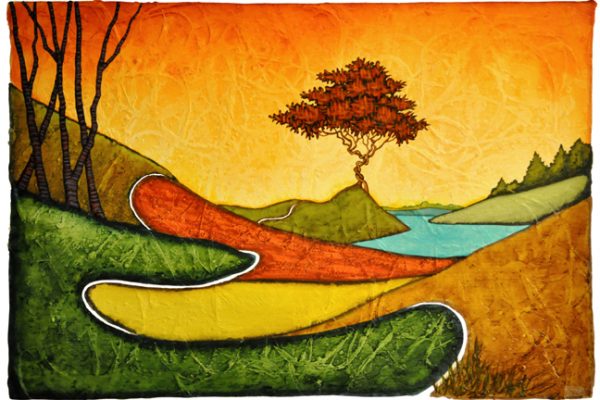
Liebesträum (German for Dreams of Love) is a set of three solo piano works by Franz Liszt, published in 1850. This is the hauntingly beautiful theme for the third of these piano solos. The poems on which the songs are based depict three different forms of love; exalted love (saintly or religious love), erotic love, and unconditional mature love (the subject of the current theme.) Liebestraum No. 3 is the last of the three that Liszt wrote, and the most popular. What’s really interesting and somewhat unusual about this section of the piano piece is that the melody frequently changes between the hands. See if you can follow my fingers as the melody alternates between my right and left hands. Particularly starting at around the 1 minute mark, I am constantly amazed at how the melody seems to be kind of drifting up between my hands even as I’m playing it! To quote Gary Myers (a great artist from the NY state finger lake region who has graciously allowed me to use his beautiful painting of the same name to match the mood of the piece) talking about his painting (but his impressions also apply to the music) : “ [...]
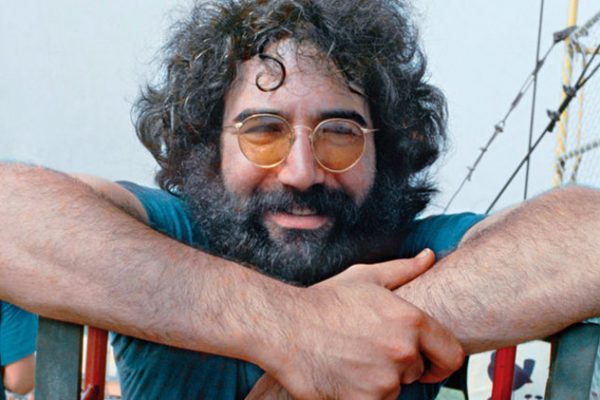
On This Day (August 9) in 1995 Jerry Garcia passed away (8 days after his 53rd birthday) from a heart attack. For me, this is when the final spirit of the sixties really ended (along with John Lennon’s death years earlier). As one of its founders, Garcia performed with the Grateful Dead for their entire 30-year career (1965–1995). He was renowned for his musical and technical ability, particularly his ability to play a variety of instruments, and his ability to sustain long improvisations with The Grateful Dead. Regarding his soloing style, I thought this was interesting (and useful, to a soloist): When asked to describe his approach to soloing, Garcia commented: "It keeps on changing. I still basically revolve around the melody and the way it's broken up into phrases as I perceive them. With most solos, I tend to play something that phrases the way the melody does; my phrases may be more dense or have different value, but they'll occur in the same places in the song.” Garcia first met lyricist and poet Robert Hunter in 1961, who would become a long-time friend and lyricist for the Grateful Dead, officially a non-performing band member. Of note, Hunter was [...]
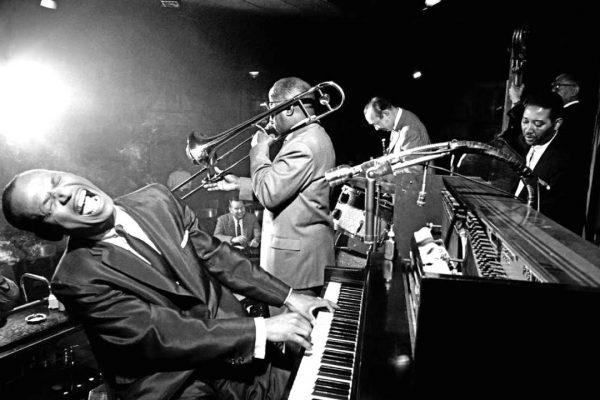
"St. Louis Blues" is a popular American song composed by W. C. Handy in the blues style and published in September 11, 1914. It was one of the first blues songs to succeed as a pop song and remains a fundamental part of jazz musicians' repertoire. Louis Armstrong, Bing Crosby, Bessie Smith, Count Basie, Glenn Miller, Guy Lombardo, and the Boston Pops Orchestra are among the artists who have recorded it. This arrangement is close to the way it was played by Earl Hines, one of the most influential jazz pianists ever. Although I had heard the name, until recently I didn’t know much about Hines. I didn’t know that … OK, there is too much to say here about Hines or Handy, for that matter - just go to Wikipedia if you’re interested. However, a few quotes: the trumpeter Dizzy Gillespie (a member of Hines's big band, along with sax player Charlie Parker) wrote "the modern piano came from Earl Hines." Erroll Garner said, "When you talk about greatness, you talk about Art Tatum and Earl Hines”. Count Basie said that Hines was "the greatest piano player in the world". As a matter of fact, he does sound pretty [...]
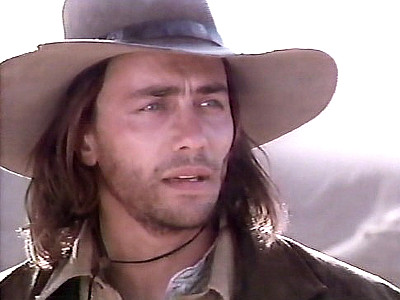
On this day (July 22) in 1947 Don Henley was born in Gilmer, Texas. Desperado was written for the Eagles by Don Henley and Glenn Frey (their very first song.) It was based on a song he had started in the style of old songs by Stephen Foster (Way Down Upon the Swanee River.) In fact, he imagined a Stephen Foster song as sung by Ray Charles. Well, they came up with an enduring classic with instantly relatable chord changes and a compelling cowboy story. I mean, who can’t relate to ‘you ain't gettin' no younger’, ‘walking through this world all alone’, ‘don’t your feet get cold in the wintertime’ and letting someone love you? Once again, this song is so much fun to play - especially this one, to which I have the following somewhat tenuous connection. This performance is dedicated to my friend Alex McArthur, who played the heroic title role of Duell McCall in Desperado, an indelible but short-lived series of five Western TV movies in the ’80s. Throughout the film series, McCall is "a man of principle who roams the West of yesteryear helping people in trouble while struggling to get himself out of trouble—clearing himself [...]
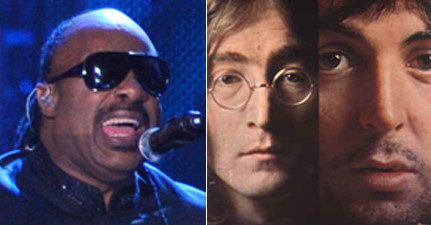
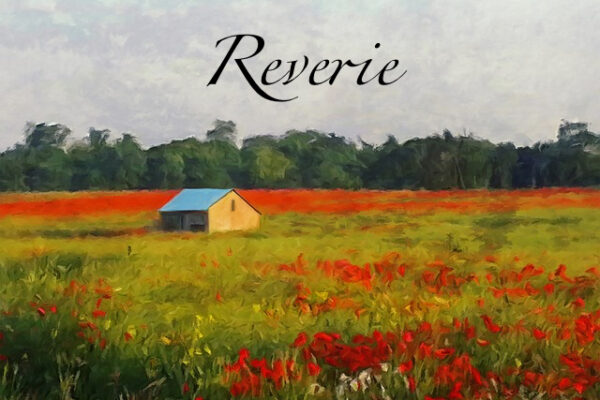
This is just another example of the musical point that I have been trying to make with Weiss Music Minutes in various genres: very many complete and satisfying musical ideas can be stated in 60 seconds or less (also look out for Weiss Medical Minutes.) In any case, this little recording of the first 16 bars (with a two bar intro) of Debussy’s Reverie is a perfect example. (Moreover, not only can this dream-like introductory section stand on its own, it is so unique and has such resonance that many people will hear this section once and remember it for the rest of their lives!) This performance was inspired by seeing Hershey Felder as Debussy at the Laguna Playhouse recently. If you haven’t yet seen him perform, remember his name, look him up on google, and see him somewhere. He performs all over the world, but comes to Laguna at least once a year. Enjoy, Dr. Weiss P.S. A few other Debussy-related performances: Happy Birthday Stevie Wonder, Happy Mother's Day 2018 Bosendorfer piano sound - For this recording I’m playing a Yamaha Clavinova – which has the same keyboard action as a traditional acoustic piano, but there are no strings. Pressing [...]
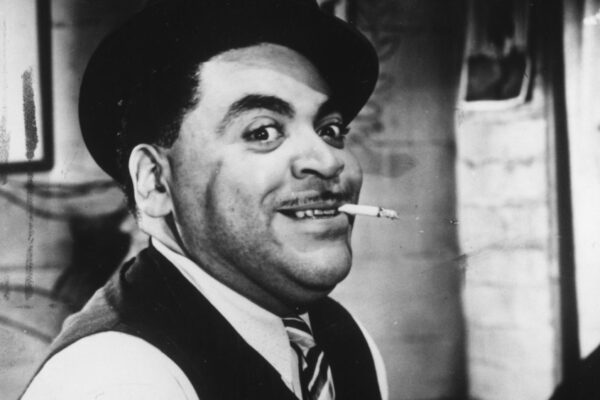
On This Day (July 9) 90 years ago in 1929, "Fats" Waller’s classic “Ain't Misbehavin'" was recorded in New York City at the height of the ‘Roaring twenties’ for a Broadway musical comedy. Waller said the song was written while "lodging" in prison (for an alimony violation), and that is why he was not "misbehaving". Interestingly, in the play, Louis Armstrong played "Ain't Misbehavin'" in a trumpet solo, and although this was initially slated only to be a reprise of the opening song, Armstrong's performance was so well-received that he was asked to climb out of the orchestra pit and play the piece on stage. Anyway, “Fats Waller” has always been one of my favorites. His innovations in the Harlem stride style laid the groundwork for modern jazz piano. His best-known compositions, "Ain't Misbehavin'" and "Honeysuckle Rose", have been inducted into the Grammy Hall of Fame. I’ve really gotten a lot of joy over the years playing this song and I hope you enjoy it also. To qualify for a Weiss Music Minute it was necessary to speed it up a bit, but it still feels right, maybe a little on the fast side. But hey, it was at [...]
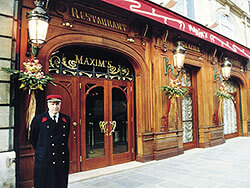
“Waltz At Maxim’s” is also by Alan Jay Lerner and Frederick Loewe. This delightful tune from the broadway play Gigi is another beautiful love song. I think the music alone accurately evokes this exciting feeling. I’ve included it as another Weiss Music Minute – Valentine’s Day edition, and also because the arpeggio I’ve added at the end is so fun to play! Bosendorfer piano sound - For this recording I’m playing a Yamaha Clavinova – which has the same keyboard action as a traditional acoustic piano, but there are no strings. Pressing a key activates (in this case) a sound which was sampled from a Bösendorfer Imperial Concert Grand piano. Try listening to it with a good set of headphones! It sounds better than any piano I've ever owned!!
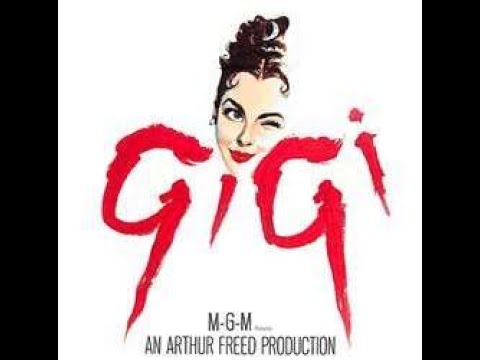
“Gigi” is another memorable romantic song by Alan Jay Lerner and Frederick Loewe from the film Gigi (two other well known songs from the same film: “Thank Heaven for Little Girls” and “I Remember It Well.”) By the way, in addition to My Fair Lady and Gigi, Lerner and Loewe also gave us Camelot. I spent so many hours listening to the songs from Camelot when I was a kid – now I know that I have Lerner and Loewe to thank. Thanks, boys! Bosendorfer piano sound - For this recording I’m playing a Yamaha Clavinova – which has the same keyboard action as a traditional acoustic piano, but there are no strings. Pressing a key activates (in this case) a sound which was sampled from a Bösendorfer Imperial Concert Grand piano. Try listening to it with a good set of headphones! It sounds better than any piano I've ever owned!!
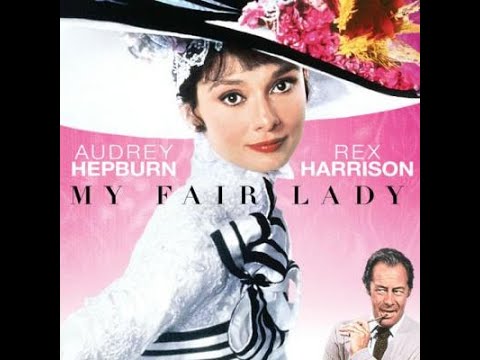
On this day in 1988 we lost Frederick Loewe, who composed the music for “I Could Have Danced All Night”. This is a love song from the musical My Fair Lady, with lyrics by Alan Jay Lerner, published in 1956. The song is sung by the musical’s heroine, Eliza Doolittle, expressing her excitement after an impromptu dance with her tutor, Henry Higgins. Interestingly, in the 1964 film adaptation of the musical, the song was sung by Marni Nixon, dubbing the singing voice of Audrey Hepburn, who played Eliza Doolittle in one of her most memorable roles. Check out Audrey Hepburn doing the song on youtube – she does an excellent job of lip syncing, although I’ve read that she also had a great voice! Bosendorfer piano sound - For this recording I’m playing a Yamaha Clavinova – which has the same keyboard action as a traditional acoustic piano, but there are no strings. Pressing a key activates (in this case) a sound which was sampled from a Bösendorfer Imperial Concert Grand piano. Try listening to it with a good set of headphones! It sounds better than any piano I've ever owned!!
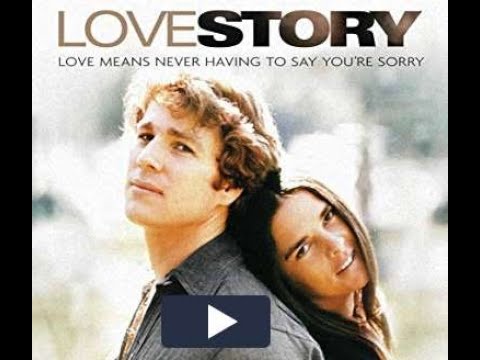
“The Theme from Some Story”, written by Francis Lai, kicks off our Valentine’s day songs. Love Story is considered one of the most romantic films ever by the American Film Institute (and the one that gave rise to the famous quote: “Love means never having to say you’re sorry.” Still can’t understand that one!) This is the 1970 role that catapulted Ali McGraw to international fame. In fact, in 1972, MacGraw was voted the top female box office star in the world. I just realized that this timeless song may have been written in a classical fashion to coincide with the fact that MacGraw’s character was a student of classical music. Bosendorfer piano sound - For this recording I’m playing a Yamaha Clavinova – which has the same keyboard action as a traditional acoustic piano, but there are no strings. Pressing a key activates (in this case) a sound which was sampled from a Bösendorfer Imperial Concert Grand piano. Try listening to it with a good set of headphones! It sounds better than any piano I've ever owned!!