Welcome to my music blog -
The Soundtrack of My Life!
Many of you have asked me “What’s with all the music, Dr.
Weiss?” Well, as I’ve told some of you:
I personally call every surgery patient on the evening of
surgery just to make sure they are doing well and have no questions that need
answering. Occasionally, I would be at the piano and play a song that we had
listened to that day. I gradually realized that I wanted to go through all the music
that I had played during my life and at least start making a list of the songs that
I had recently played.
Well, there are now about 600 songs on the list and I realized
that it in a way it represented the ‘soundtrack of my life’! And that’s how I got
the idea to record these songs and share them with my patients, friends and family.
After I record them they will reside here, for easy access.
Music is truth. It’s honest. It’s really the first social
media, where in a way, people could share their souls directly. And isn’t that what
the purpose of social media is and why it’s so popular - trying to share who you
really are, as completely and directly as possible?
Finally, it has been (and will continue to be) a genuine
pleasure sharing these different songs with you and I really appreciate all of your
positive feedback!!
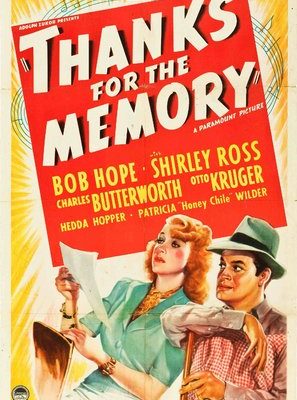
"Thanks for the Memory" (1938) is a popular song composed by Ralph Rainger with lyrics by Leo Robin. It was introduced in the 1938 film The Big Broadcast of 1938 by Bob Hope and Shirley Ross. In the film, Ross and Hope's characters are a divorced couple who encounter each other aboard a ship. Near the film's end, they poignantly sing one of the many versions of this song, recalling the ups and downs of their relationship (then they decide to get back together). The song won the Academy Award for Best Original Song, and became Hope's signature tune, with many different lyrics adapted to any situation. In the movie the song had three verses (I guess it had to be longer as background for one of the main scenes), the published song had two verses, but, for your listening pleasure, I cut the song down to only one verse. I guess the song was pretty popular, judging from versions by: Bing Crosby, Ella Fitzgerald, Sarah Vaughan, Frank Sinatra, Rosemary Clooney, Rod Stewart and others. This performance is dedicated to my friend and patient Judianne. Enjoy, Dr. Weiss Some information from Wikipedia. Bosendorfer piano sound - For this recording I’m [...]
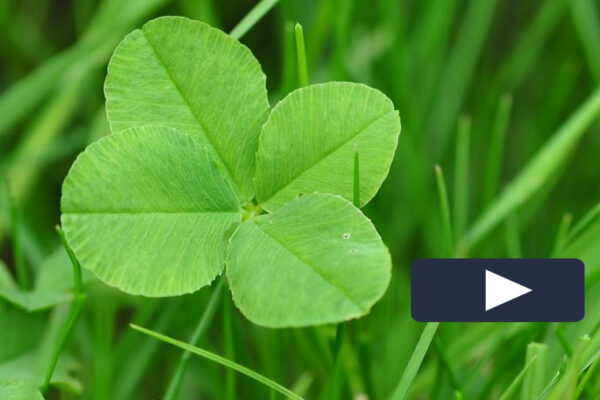
“I’m Looking Over a Four Leaf Clover” was composed by Henry MacGregor Woods, who also wrote the music for “When the Red, Red Robin (Comes Bob, Bob, Bobbin’ Along)”! Although Woods became legendary from this song, in modern times the song is probably most associated with Merrie Melodies cartoons (maybe that’s where I first heard it). It’s also a common tune played by the string bands in Philadelphia’s Mummers Parade (a shout out to my home town, Philadelphia! Picture the Mummers strutting to this song at the speed that I’m playing it! Pretty funny!) This song is dedicated to my friends AB, Brett, Gene, Aileen, Jason and Nathan. Dr. Weiss Bosendorfer piano sound - For this recording I’m playing a Yamaha Clavinova – which has the same keyboard action as a traditional acoustic piano, but there are no strings. Pressing a key activates (in this case) a sound which was sampled from a Bösendorfer Imperial Concert Grand piano. Try listening to it with a good set of headphones! It sounds better than any piano I've ever owned!!
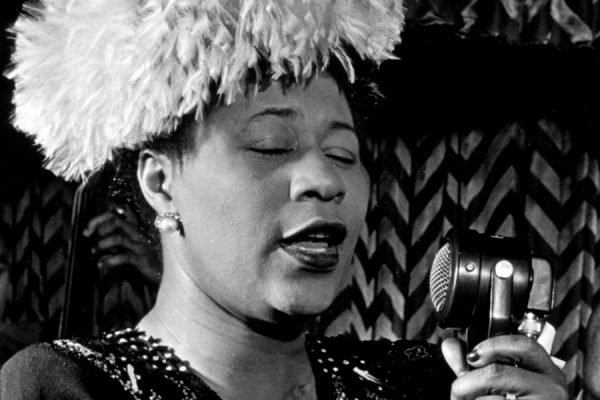
More Than You Know I am a big fan of female jazz vocalists. This is a song that was famously sung by two of my favorites, Bille Holiday and Ella Fitzgerald (among many, many others.) I probably first heard their version while I was an intern in Hartford, Connecticut. I shared a house with a jazz DJ who gradually introduced me to many jazz LPs every night on his way to his bedroom upstairs. I fell in love with their voices and this song. (By the way, composer Vincent Youmans also wrote the music for Tea for Two.) Thanks again, Todd. (Happy Birthday!) Enjoy, Dr. Weiss Bosendorfer piano sound - For this recording I’m playing a Yamaha Clavinova – which has the same keyboard action as a traditional acoustic piano, but there are no strings. Pressing a key activates (in this case) a sound which was sampled from a Bösendorfer Imperial Concert Grand piano. Try listening to it with a good set of headphones! It sounds better than any piano I've ever owned!!
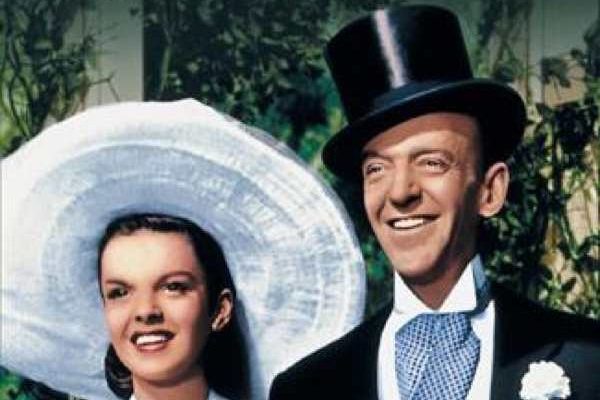
Back by popular demand, I'm happy to share again what is becoming something of an annual Easter tradition - me playing the Easter Parade for my poodle Bisou! I'm not sure if Bisou ever got a chance to watch the classic movie with Fred Astaire and Judy Garland, but she definitiely appreciated the music! I hope you enjoy! Dr. Weiss
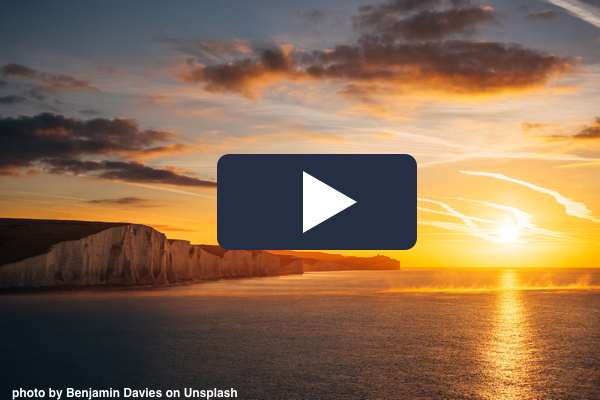
The White Cliffs of Dover “(There'll Be Bluebirds Over) The White Cliffs of Dover" is one of the most popular World War II songs, composed in 1941 by Walter Kent to lyrics by Nat Burton. I’ve always loved this emotional song. The song was written about a year after the Royal Air Force and German aircraft had been fighting over southern England, including the white cliffs of Dover, in the Battle of Britain. Nazi Germany had conquered much of Europe and in 1941 was still bombing Britain. With neither America nor the Soviet Union having yet joined the war, Britain was the only major power fighting the Axis powers in Europe. The American lyricist, Nat Burton, wrote his lyric unaware that the bluebird is not indigenous to Britain and asked Kent to set it to music. The lyrics looked towards a time when the war would be over and peace would rule over the iconic white cliffs, Britain's symbolic border with the European mainland. My father always told me that it is hard to describe the overall feeling of what it was like during World War II. I still can’t imagine how it felt for the English fighting the Germans alone [...]
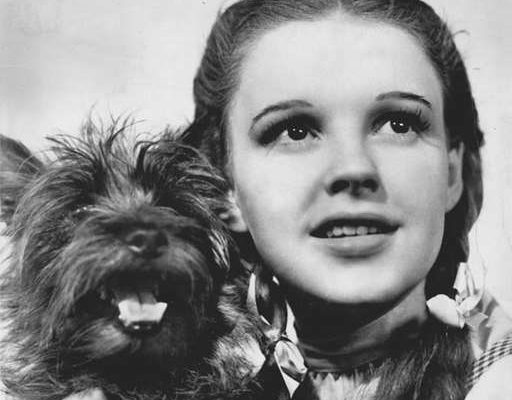
On This Day (March 5) in 1981, Yip Harburg, the lyricist of “Over The Rainbow” passed away. Critics have ranked Judy Garland’s rendition of “Over the Rainbow” as the Number One recording of the 20th century! Yip put words to Harold Arlen’s music for “Over the Rainbow" for the movie The Wizard of Oz, for which he won an Academy Award for best original song. He also contributed much of the script for The Wizard of Oz, including the part where they give out the heart, the brains and the nerve. Unbelievably, the song was deleted (and later thankfully reinserted) from the film after a preview because MGM chief executive Louis B. Mayer thought it "slowed down the picture”! Yip also wrote the lyrics to the standards "Brother, Can You Spare a Dime?", "April in Paris", and "It's Only a Paper Moon", as well as all of the songs in The Wizard of Oz. He was known for the social commentary of his lyrics, championing racial and gender equality and union politics. Tragically, although never a member of the Communist Party, he was falsely accused and blacklisted in McCarthy’s fake communist witch hunt of the 1950s. He refused to identify other [...]
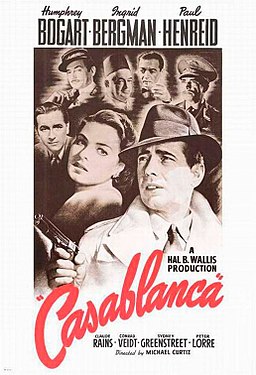
Casablanca is consistently rated as one of the most important and influential movies ever made. Many of its elements are synonymous with classic Hollywood - black and white film grain, Humphrey Bogart in a trench coat, the oh-so-quotable lines and of course, the indelible soundtrack! Today's On This Day is a performance of the song "As Time Goes By", memorably performed by Sam in the famed nightclub, in honor of composer Herman Hupfeld's birthday. Interesting factoids: The "piano player" Dooley Wilson was actually a drummer, so the piano was actually played by someone off screen! Also interesting, is that one of the lines most often associated with the film ("Play it again, Sam), is actually a misquote! When Ilsa first enters the Café Americain, she spots Sam and asks him to "Play it once, Sam, for old times' sake." After he feigns ignorance, she responds, "Play it, Sam. Play 'As Time Goes By'". Finally, the aforementioned song might have been dropped from the film entirely if not for a haircut Ingrid Bergman got for her next film - making reshoots impossible. So if not for a haircut, we might never have known this song!! Thanks for watching and "here's looking [...]
This romantic ballad was popularized by artists like Sarah Vaughan and Nat King Cole! Jerome Kern, one of the most important American theatre composers of the early 20th century, wrote more than 700 songs, including including such classics as "Ol' Man River", "A Fine Romance", "Smoke Gets in Your Eyes", "All the Things You Are” and "The Way You Look Tonight. “ He was nominated eight times for an Academy Award, and won twice. At the time of Kern's death, Metro-Goldwyn-Mayer was filming a fictionalized version of his life, Till the Clouds Roll By, which was released in 1946 starring Robert Walker as Kern. In the film, Kern's songs are sung by Judy Garland, Kathryn Grayson, June Allyson, Lena Horne, Dinah Shore, Frank Sinatra and Angela Lansbury, among others. Bosendorfer piano sound - For this recording I’m playing a Yamaha Clavinova – which has the same keyboard action as a traditional acoustic piano, but there are no strings. Pressing a key activates (in this case) a sound which was sampled from a Bösendorfer Imperial Concert Grand piano. Try listening to it with a good set of headphones! It sounds better than any piano I've ever owned!!
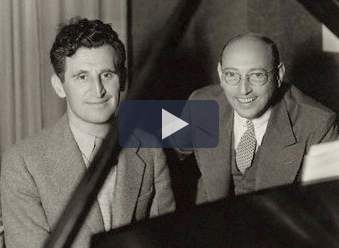
Nevertheless was composed by Harry Ruby (born January 27, 1895) with lyrics by Bert Kalmar. Their songwriting partnership was portrayed in the 1950 MGM musical 'Three Little Words', starring Fred Astaire as Kalmar and Red Skelton as Ruby. I love those old ’tin-pan alley’ movies! Notable cover versions of Nevertheless: (I especially want to track down the Telly Savalas (Kojak) version!) The Andrews Sisters Fred Astaire Count Basie Bing Crosby Barry Manilow Dean Martin Liza Minnelli Olivia Newton-John Andy Gibb Harry Nilsson Frank Sinatra Rod Stewart Rudy Vallée Betty White Telly Savalas Bob Dylan Other songs by Ruby and Kalmar: “Who's Sorry Now?”, "I Wanna Be Loved by You” (sung by Marilyn Monroe in the film Some Like It Hot), "Three Little Words”, and the television them for “The Real McCoys” (1957-1963). They also wrote the musical scores for three classic Marx brothers films, Animal Crackers, Horse Feathers and Duck Soup which Included the classics “Hello I Must Be Gong”, “Whatever It Is, I’m Against It”, and “Everyone Says I Love You!” Bosendorfer piano sound - For this recording I’m playing a Yamaha Clavinova – which has the same keyboard action as a traditional acoustic piano, but there are no [...]
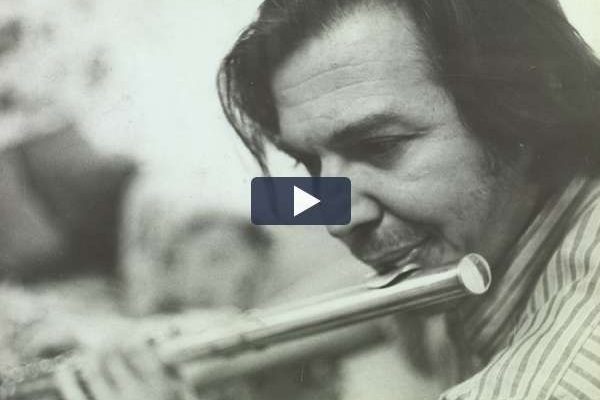
On this day, Brazilian musician Antonio Carlos Jobim was born in 1927! "How Insensitive" is one of his more popular songs, having been covered by a large and diverse swath of people - from Ella Fitzgerald and Diana Krall to Liberace, The Monkees and William Shatner of Star Trek fame! Jobim is also known perhaps for his most popular song (and one of the most recorded songs in the world )- The Girl from Ipanema. Bosendorfer piano sound - For this recording I’m playing a Yamaha Clavinova – which has the same keyboard action as a traditional acoustic piano, but there are no strings. Pressing a key activates (in this case) a sound which was sampled from a Bösendorfer Imperial Concert Grand piano. Try listening to it with a good set of headphones! It sounds better than any piano I've ever owned!!